
Obituary research
How to find an old obituary when you only know the name and town
Work from death date, relatives, newspaper coverage and notice type to find historical obituaries without relying on one exact phrase.

On this page
- Start by separating the kinds of death coverage
- Turn a name and town into a research brief
- Build a death-date window that matches newspaper timing
- Search the name in forms a newspaper may use
- Search relatives when the person's name is hard to find
- Use event and funeral language instead of one label
- Browse likely issues and read beyond the name
- Assess whether the item is about the right person
- Use libraries and local collections when the issue is missing
- Record the item so someone else can check it
- A hands-on exercise for one obituary search
- Know what an obituary can and cannot prove
- Sources for checking historical newspaper research
An old obituary can answer a family question in a few lines. It may name a spouse, children, parents, a former residence or a cemetery. It may also create new questions. Newspapers used different kinds of death coverage, and the item you need may not be labeled obituary at all.
A search for a full name is a reasonable beginning. It is a poor stopping point. The surname may be misspelled in the text index, the person may be identified by a married name or initials, or the newspaper may have printed only a brief death notice. The relevant issue may also be missing from the collection you opened.
Search for the paper's pattern of coverage, not only one sentence labelled obituary. A brief notice, funeral report, local-news item and later memorial may be separate clues. A blank name search is a question about timing and collection coverage, not a verdict about the person.
This guide focuses on historical US newspaper research, with room for local and regional routes elsewhere. It explains how to separate notice types, build a workable date range, search through relatives and context, and inspect the page when an exact name query fails. When the archive's text index is the obstacle, the OCR and page-image guide provides the broader search tactics. Treat each item as evidence to assess. A newspaper can contain errors, omissions and unverified claims.
Start by separating the kinds of death coverage
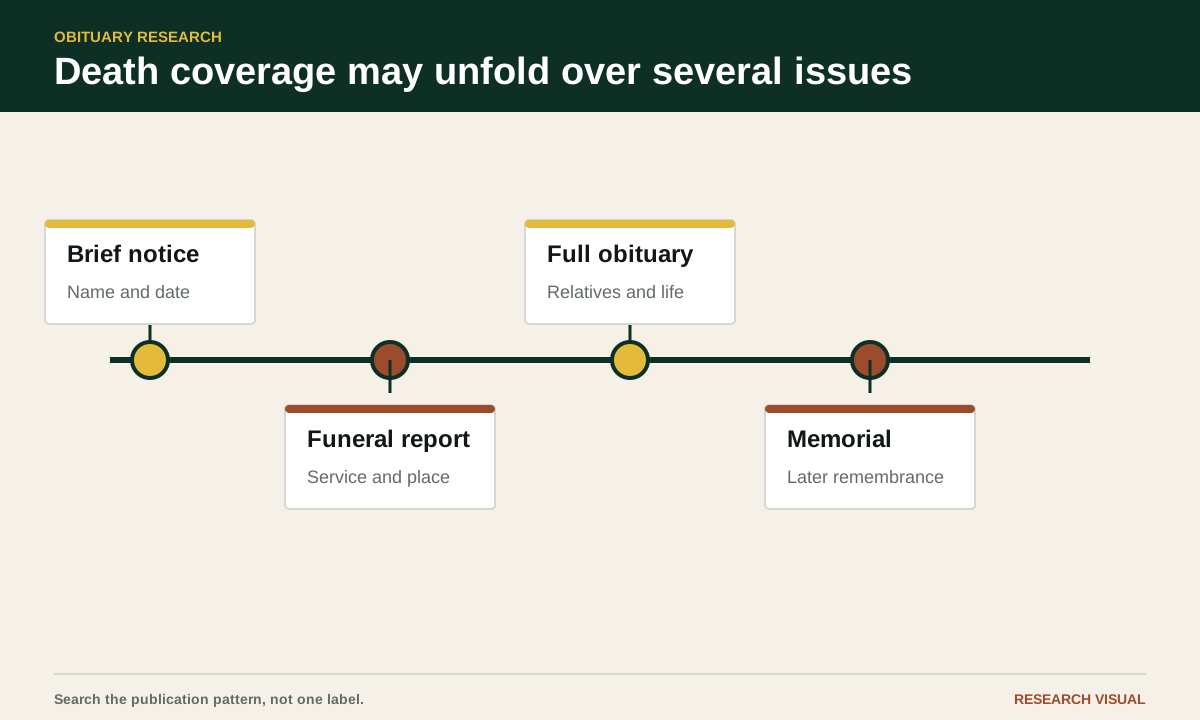
The word obituary is often used for several different items. A death notice may give the name, date and funeral details in a few lines. An obituary may provide a longer account of the person's life and family. A funeral notice may focus on the service. A memorial or in-memoriam item may appear later, sometimes on an anniversary. A news report may describe a death because it involved an accident, public office or unusual circumstances.
Paid notices can look different from editorial material. A family may submit a notice of thanks after a funeral. A church or organization may publish a resolution. A coroner's or hospital-related report may name a person without offering biographical details. A column of local news may mention the death in a sentence before a longer item appears in a later issue.
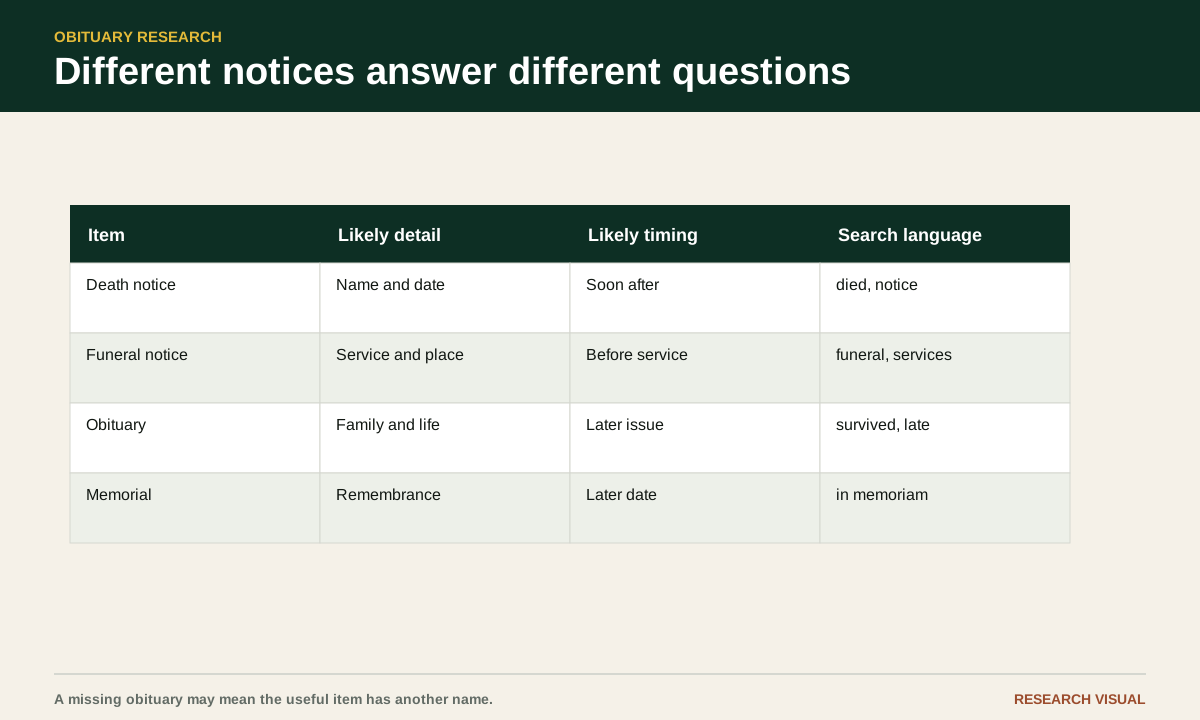
These categories overlap, and the newspaper may not label them clearly. Search for the event language as well as obituary. Useful terms include died, death, funeral, services, burial, memorial, survived, remains, called home, passed away, late, in memoriam and notice. Period wording changes by place, date and publication style, so use several terms without assuming that one is standard.
The distinction matters because each notice type may have a different date and level of detail. A short notice can precede a fuller account; an in-memoriam item can appear later. Search the event and its context as well as the label. When you find an item, verify and preserve the newspaper evidence rather than treating the search snippet as the citation.
Turn a name and town into a research brief
Before opening an archive, write down what you know and what you want the newspaper to establish. Your target might be "Find the death notice or obituary for Samuel Ortiz, who lived in or near Cedar Falls, and identify his spouse and funeral date." That is more useful than "Find Samuel Ortiz."
List the name forms you already have. Include a middle name or initial, a nickname, a title, a married name, an earlier surname and spelling differences from family records. Record the source of each form. A handwritten family Bible, a census entry, a gravestone and a later obituary may use different names for the same person.
Add the likely place in layers. Write the town, county, nearby towns, previous residence, workplace and the place where the person died if known. A local paper might report a resident's death even when it occurred in a hospital elsewhere. A hometown paper might publish a fuller account after a person moved away.
Add dates with room around them. Record a known or estimated death date, then search a reasonable window on both sides. Include a funeral date if you have one, as well as the date of burial, probate activity, memorial services or a later anniversary. The newspaper's publication date can differ from each event date.
Finally, state the evidence target. Are you looking for identity, relatives, an exact date, a place of burial, an occupation or a clue to another newspaper? A clear target keeps you from treating every person with the same name as the right one.
Build a death-date window that matches newspaper timing
The date of death is the strongest starting point when you have it, but it is not always the date of publication. A daily paper might print a brief notice quickly and a fuller account later. A weekly paper may wait for the next issue. A funeral announcement can precede the service, while a thank-you notice follows it.
Search several days before and after the known date. For a weekly title, search the issue that covers the date and the next one or two issues. Extend the range when the person died outside the paper's immediate town or when family members needed time to provide details. Keep the expanded range visible in your notes so a later reader knows why you searched it.
If the death date is only an estimate, use other dated events to anchor the search. A funeral notice, cemetery record, probate filing or church record may narrow the window. A newspaper may report that services will be held on Sunday, making the issue date likely to fall a few days earlier.
Look for repeated coverage. A first item may say only that a resident died. A later item may give the funeral location, relatives and burial place. Another paper may carry a regional report when the person was prominent or died away from home. Compare the dates and wording rather than assuming the longest item is the earliest.
The publication date is evidence about when information reached readers. It is not necessarily proof of the death date. Preserve both dates when you cite the item.
Search the name in forms a newspaper may use
Run the full name first, then simplify it. Search the surname with a first initial, the surname alone, and the given name with a place or relative. Try a middle name separately if it might have been read as part of the surname. If the newspaper uses honorifics, search a form with Mrs., Miss, Dr. or a military title only when the archive handles punctuation predictably.
Married women may appear under a husband's name, their maiden name or a combination. A notice might say "Mrs. Thomas Green" without giving her first name. Search the husband's name and look for the address or relatives you expect. For a child, the notice may identify the person as the son or daughter of named parents rather than use an independent household record.
Consider initials and nicknames. Newspapers may print W. Arthur as Arthur W., Art, or a first initial followed by the surname. A person known in family records as Robert may appear as Bob. Keep every form tied to the source that supplied it, and do not treat a nickname as proof of identity by itself.
Test likely OCR errors with restraint. Common confusions include a missing apostrophe, a merged word, a dropped letter or a surname split between lines. Search distinctive fragments only when they will not bring back an unmanageable number of results. If the name has a prefix such as Mc, Mac, O', Van or De, try joined and separated forms.
Do not silently update an old spelling to a modern one. The printed form may reflect the family's own usage, a typesetter's error or an OCR mistake. Record what the page shows and explain your reading when it is uncertain.
Search relatives when the person's name is hard to find
An obituary is a relationship-rich item. That makes relatives useful search anchors. If you know a spouse, child, parent, sibling or in-law, search that person's name in the same place and date range. A paper may index the relative correctly even when the deceased person's name is distorted.
Use relationship words that may appear in the notice: wife, husband, widow, widower, son, daughter, brother, sister, survived by, leaves and relatives. Search a relative with the town or funeral language. A distinctive spouse surname may find the page that the deceased person's surname missed.
Try the family's residence, occupation, church or organization. Local papers often identify someone through the community they belonged to. A notice might mention a lodge, union, congregation, school or employer rather than a full biography. These details help you find an item and later assess whether it concerns the right person.
Be careful with relationship language. "Survived by" generally lists living relatives at the time of publication, but a list may be incomplete. A spouse's presence in a notice is useful evidence, though a missing spouse does not prove a separation or earlier death. Newspapers summarized family relationships for space and audience.
When you find a relative's notice, read backward and forward through nearby issues. A funeral report, a thank-you notice or a society item may repeat the family names. Those repeats can lead to the original death coverage or to another newspaper with more detail.
Use event and funeral language instead of one label
Search for event words such as death, funeral, burial, interment, memorial or visitation. Add a place, relative or occupation to reduce noise. Keep the date window consistent and record which terms return useful results.
Historical language can be formal or indirect. A notice may say that someone "passed away," "answered the final summons" or was "called to rest." These phrases can be useful in a page browse even when they are too common for an archive search. If a collection offers subject or section filters, look for local news, society, church, court, hospital or community pages.
Funeral information can be more searchable than biographical information. A service location, cemetery, minister, funeral home or pallbearer list may appear in a short notice. Once you locate the funeral item, inspect nearby text for a longer account or a related family notice.
Remember that a death can be reported outside the obituary page. An accident may appear on the front page or local news. A public official's death may be covered in a political or civic section. A child may be listed in a community column. Search by event and community context when the ordinary obituary terms lead nowhere.
Browse likely issues and read beyond the name
When the exact name search fails, open issues in your date window. Start with local news, funeral notices, church material, society items and community reports. Note recurring headings and where they appear.
Use thumbnails to find dense columns, but read the full page image when you see a possible item. A surname in a text preview may be a false match. A name that appears only once may be part of an unrelated advertisement. Context tells you whether the age, residence, relatives and funeral details fit your target.
Read the entire item and any continuation. Obituaries often run in a column with a headline that the OCR did not connect to the body. A short notice may point to a funeral report in another part of the issue. If the article continues on another page, the relationship list may be there.
Inspect adjacent issues. A first notice may announce the death, the next issue may carry the obituary, and a later issue may print a correction or family thanks. Weekly papers especially reward this kind of browsing. Keep the issue date and printed page number for each item you inspect.
Look at neighboring items for people and places that can identify the family. A local column may mention a surviving child visiting from another town. A church notice may name the minister conducting the funeral. Those details can support or challenge an identity match, but they remain clues until compared with other evidence.
Assess whether the item is about the right person
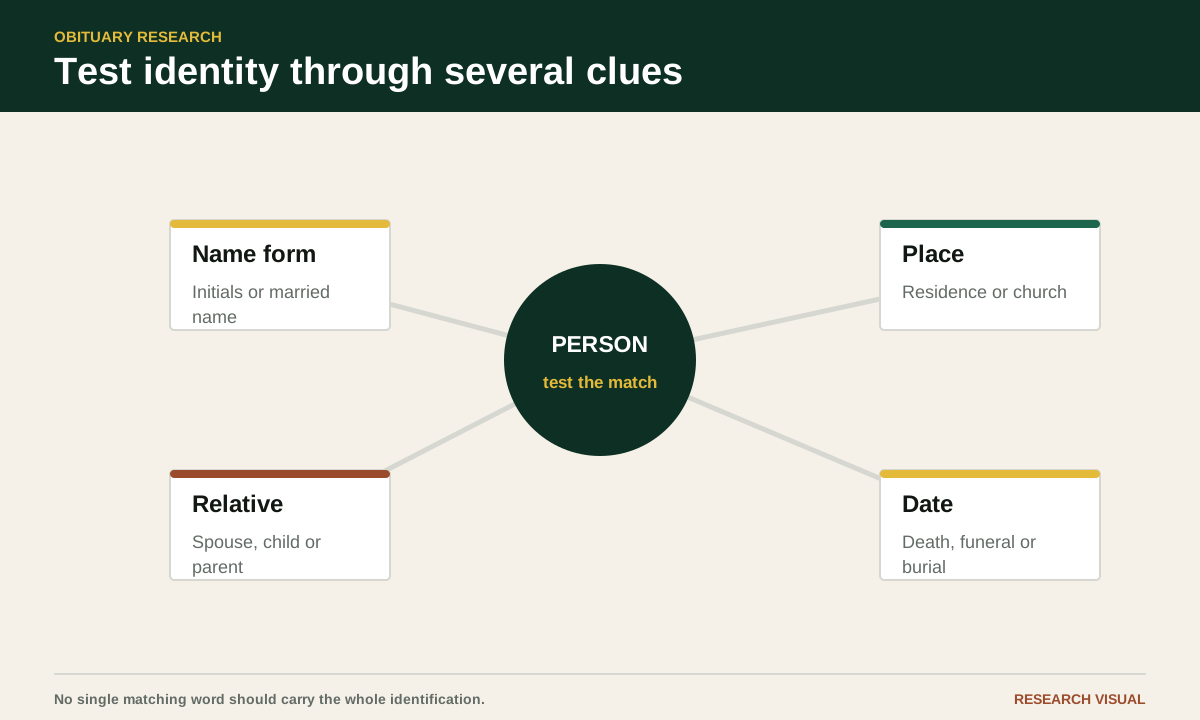
A matching name is only one part of identification. Compare the person's residence, age, occupation, spouse, parents, children, church, organization and cemetery with information from your other records. No single detail has to match perfectly, especially when the newspaper made a mistake, but an unexplained conflict deserves attention.
Use negative evidence carefully. An obituary may omit a child, use only the surviving relatives nearby, or describe a second marriage without naming earlier family members. The absence of a name is not proof that the relationship did not exist.
Check the wording for source and certainty. A line such as "according to relatives" tells you something about how the newspaper obtained the detail. A correction in a later issue may alter a name or date. An editorial obituary may contain praise or local opinion alongside factual information.
Compare multiple newspapers when the identity matters. A hometown weekly, a regional daily and a paper from the place of death may each preserve different details. Differences do not automatically make one item false. They show that the reports came from different sources or were written for different audiences.
Separate quotation, transcription and inference in your notes. Quote the newspaper's wording where it matters. Transcribe names and dates carefully. Then write your conclusion as a conclusion: "This is likely the same Samuel Ortiz because the item gives the Cedar Falls residence, names his wife Elena and lists burial at the cemetery recorded elsewhere." That is stronger than copying the article and leaving the reasoning invisible.
Use libraries and local collections when the issue is missing
A blank result can reflect a collection gap. Check the title's date coverage, missing pages and edition notes. A catalogue entry does not guarantee that a particular issue is digitised or readable. Record the gap instead of treating it as a negative search. The Library of Congress explains that newspaper indexes can lead to article citations, but there is no comprehensive retrospective index across titles and long periods. Its newspaper-index guidance also points to selected local obituary indexes, so check libraries serving the place you are researching rather than expecting one national name index.
Public libraries, state libraries, universities and historical societies may hold the title on microfilm or in local digital collections. The Library of Congress newspaper-finding guide describes checking a title's date range and library holdings, and warns that not every U.S. newspaper has been digitised. Ask the repository about the exact title and date range, whether that issue is held, and whether a local obituary index or successor title might help.
When contacting a library, give a narrow request. Include the person's name forms, town, estimated death window and the kind of item you seek. Ask whether the issue is held, whether pages can be searched or viewed, and how the repository identifies the reel or scan. Avoid asking a librarian to prove a family relationship from a vague name alone.
If another repository provides a clearer page, cite the route you used. Preserve the collection name, issue date, page and stable link or catalog reference. A future researcher should be able to distinguish the original newspaper from a later index or clipping.
Record the item so someone else can check it
For every useful notice, record the newspaper title exactly as shown, the publication date, edition if available, printed page, archive page or image identifier, stable URL and access date. Note whether the item is a death notice, obituary, funeral report, memorial, correction or family thank-you.
Save a permitted page image or clipping with enough surrounding context to show the column and heading. Use a filename that includes the title, date and page. Keep the original image separate from your transcription. If you crop for readability, retain the full-page reference as well.
Transcribe names, dates, places and relationships. Mark unclear letters. Do not smooth old punctuation, abbreviations or spelling unless you identify the change. If the page is difficult to read, describe the uncertainty and compare another copy of the issue if possible.
Add a short identity assessment. List the matching details, conflicting details and omissions that limit the conclusion. If the article says a person was survived by a spouse, quote or transcribe that wording. If you infer that two people are siblings because the notice lists them as children of the same parents, label it as an inference and seek confirmation elsewhere.
A record that preserves the page and your reasoning is more useful than a copied paragraph with no source. It also prevents a later family tree entry from hiding the difference between a newspaper statement and your interpretation.
A hands-on exercise for one obituary search
Choose a person for whom you know a name and town but have no reliable newspaper citation. Write a one-sentence target that names the evidence you want, such as the death date, surviving spouse or funeral place. Gather the name forms and the widest reasonable date range from records you already have.
Search the exact name in the likely newspaper. Then search the surname with an initial, the given name with the town, one relative and two funeral terms. Keep a log of each query, date filter and result. Do not widen every variable at once.
Pick the issue or issues closest to the estimated death date and browse the pages most likely to carry local death coverage. Read any possible item in full, including continuations and nearby columns. Check the next issue if the paper was weekly or the event timing is uncertain.
For each candidate, create two short lists. One list contains details that fit your person. The other contains conflicts, omissions or details you cannot yet test. Then write a source note with the title, date, page, link and notice type.
Finish with a decision that is narrower than "proved" or "disproved." You might write "likely match, needs cemetery or church confirmation," "useful death date, no family proof," or "same name, conflicting residence." Choose one next source that can test the weakest part of the identification.
Know what an obituary can and cannot prove
A well-preserved obituary can provide relationships, places and dates that are hard to find elsewhere. It can also repeat a family memory, omit a relative, use a courtesy title or contain a simple reporting error. Its value comes from the details you can identify, compare and cite.
Use the notice to form better questions. A named sister may lead to a different town's newspaper. A cemetery may point to a local archive. A former residence may explain why the item appears in a regional paper rather than the place where the person died.
Keep the publication date separate from the life event dates, and keep the newspaper's words separate from your conclusion. Once you work that way, an unsuccessful name search becomes manageable. You can search relatives, event language, likely pages and alternate routes without pretending that one blank result settles the question.
Sources for checking historical newspaper research
- Chronicling America: A Guide for Researchers, Library of Congress
- Historical Newspapers in U.S. Newspaper Collections, Library of Congress
- Reference Sources: Newspaper Indexes, Library of Congress
- How to Find a Newspaper, Library of Congress