
Disaster and event research
How to find ancestors in old newspaper disaster reports
A fire, flood, storm or accident can bring names into a newspaper for a single day. Start with a documented event and place, follow the reporting across later issues, then test any family connection against evidence outside the paper.

On this page
- Start with a person and a testable event
- Pin down the event and the reporting window
- Search for the words papers used at the time
- Look beyond lists of people killed or injured
- Follow the story across later issues
- Find the local and regional papers that covered the place
- Search text, then read the full page image
- Separate the report from your identification
- Choose another record that can test the claim
- Check weather-event dates with the right reference source
- Record what you searched and what remains uncertain
- Try a focused disaster search this week
- Common questions about disaster newspaper research
- Sources and further reading
A newspaper report about a disaster can reveal where an ancestor lived, worked, travelled or helped. It may mention a family among those affected, a worker at a damaged site, a person who offered shelter, or someone who joined a relief effort. The first report is a lead, not a complete account of what happened or proof that a person named in it belongs to your family.
The most useful searches begin with an event you can place in time and geography. From there, follow how local papers reported it, read the whole page rather than trusting a text-search result, and compare the names and details with records created for a different purpose.
Start with a person and a testable event
Choose a relative you have already placed in a community through another source. Note the name they used at the time, a known address or nearby place, and a date range you can explain. Then write one question about a possible connection to a fire, flood, storm, wreck, explosion or other local emergency.
Keep the starting facts separate from the family story you are testing. An old letter that places someone in a town during the period is a useful starting point. A later recollection that the family lost a home in a fire may suggest what to look for, but it does not establish the fire's date, location or which household was affected. Record where each detail came from and mark uncertain dates as estimates.
A focused question might ask whether a named relative appears in reports about a documented flood near their town, or whether a newspaper connects a known workplace to a factory fire. “What happened to my family during the disaster?” is too broad until you have a person, place and period to search. Our guide to starting with a clear newspaper research question can help you narrow it.
The disaster need not be famous. A local barn fire, bridge collapse or flood that affected one neighborhood may offer a better route to an ancestor than a national headline. Begin with the event your existing records can support, not the most dramatic story you can find.
Pin down the event and the reporting window
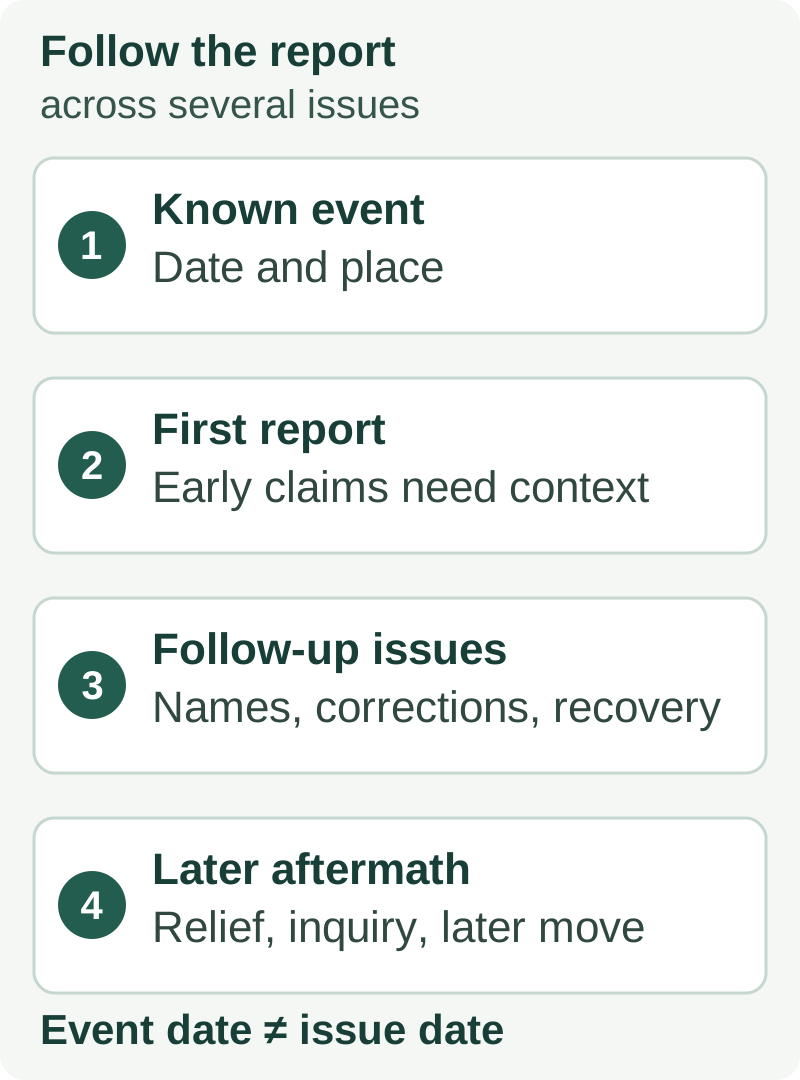
The date an incident happened is not always the date a newspaper printed it. A daily paper might report an event in the next issue. A weekly could publish it several days later, then return to the story in a later edition. Keep the event date and issue date in separate fields in your notes.
Start with the issue closest to the known event date, then inspect issues after it. For a daily, a short window around the event may be enough to begin. For a weekly, include the next several issues. Extend the range when you are following rescue work, repairs, an inquiry, a fundraising effort or a family that moved away. If the event date is uncertain, widen the period carefully and say why.
Treat the story as a sequence of reports. The first issue may give a name and a rough location. Later issues may correct a detail, describe recovery work or report a public meeting. Those are separate newspaper statements. Preserve each issue date so a later account does not silently replace what the earlier report said.
Search for the words papers used at the time
Do not rely on the modern word “disaster.” Search terms often describe the event itself. Depending on the incident, try combinations such as fire, blaze, burned, flood, freshet, storm, cyclone, wreck, collision, derailment, explosion, collapse or rescue. Older wording can differ from current usage, and papers may use a place name, company, mine, mill, bridge, ship or railway line instead of a formal event name.
Pair the event language with the town, county, street, business or landmark. Then search relevant names in different forms: initials, middle names, spelling variants, married names and nicknames. A search for a common surname alone may return too much to assess. A specific street or worksite combined with the event can lead you to a promising issue even when the person’s name is missing from the index.
Try one phrase at a time and keep a note of what you searched. If a local history uses one name for an event, look for the terms printed in the newspapers themselves. A fire that is now remembered by a building's name may have been reported at the time as a “warehouse blaze” or a “loss at the mill.” Treat these as search possibilities, not guaranteed wording.
Look beyond lists of people killed or injured
A headline may focus on deaths and damage, but family clues can appear elsewhere in the story. Reports may name residents who escaped, people who were missing, workers from a damaged site, witnesses, rescuers, officials, property owners, relief organizers or households temporarily staying elsewhere. Search for the roles that fit your question, as well as the word describing the incident.
The story may continue in a different section after the first report. Look for appeals for money or supplies, meetings, benefit events, notices about temporary housing, repairs, memorial services, investigations or court proceedings. A short mention in a later issue may identify a relative's address or occupation more clearly than the first account.
Names in these reports can be incomplete. A paper might print an initial and surname, describe someone as a neighbor, or list several people without their relationships. Do not convert an item about a household, crew or street into a claim that your ancestor was present. Make a list of each name and description the newspaper actually printed before deciding what the group may mean for your family.
Follow the story across later issues
Read more than the first article you find. An early account can be written while information is still arriving. Later issues may add names, revise estimates, correct a location or report that an earlier claim was wrong. A second newspaper may simply reprint the first story, so matching wording does not automatically provide independent confirmation.
Use the issue date to arrange reports in order. Note whether the paper says it is repeating a wire report, quoting an official, printing a letter or describing what a reporter saw. Those distinctions can help explain why two papers give different details. Keep the original wording and identify any correction rather than editing your transcription to match a later account.
Follow-up issues can also show what happened after public attention moved on. Search the event name and place again in later weeks or months. A relief committee, property auction, inquiry, memorial, reopened business or notice about a missing person may connect the event to a family. These are avenues to investigate, not proof that every affected person received a mention.
Find the local and regional papers that covered the place
The nearest newspaper office may not have been the only source of coverage. A county weekly, a larger city paper or a title in the next town could report the event. A paper published near the incident may give local names, while a regional report might summarize transport disruption or wider damage. Decide which places are plausible from the event and the family's documented location, then search those titles separately.
The Library of Congress Directory of U.S. Newspapers FAQ explains how the directory can help identify newspaper titles and access information. Its directory is a starting point rather than a complete list of every newspaper or every surviving issue. Check a local library, state library, historical society or university archive when a title or date range is missing. The Library of Congress guide to finding a U.S. newspaper explains how to work from place and period toward a likely title and repository.
Write down the exact title, publication town, dates and format reported by each catalog. Then check whether the specific issues are available online, on microfilm or in print. A title's date range does not guarantee that the issue you need survives. Use a newspaper coverage map to record the titles and gaps you have checked.
Search text, then read the full page image
A text search can lead you to a promising issue, but it does not settle what the printed page says. The Library of Congress's Chronicling America FAQ explains that searchable text is produced by optical character recognition (OCR) and can be inaccurate. Read the page image and surrounding columns before transcribing a name or quotation.
If a search returns nothing, try a spelling variant, a shorter phrase, a place name or a term for the event. You can also open likely issues and browse the pages around local news, public notices or the section where the paper reports community events. The Library of Congress has instructions for viewing and downloading Chronicling America pages. Interface labels can change, so follow the current guidance on the collection site. Our guide to searching historical newspapers when OCR gets names wrong has more ways to handle missed names.
Read enough of the page to understand the item. A headline may refer to one location while the article describes another. A name may appear in a caption, a list or an adjacent column. Check the edition and page number when visible. If the scan is faint or the text is uncertain, mark the unclear word instead of completing it from context.
Separate the report from your identification
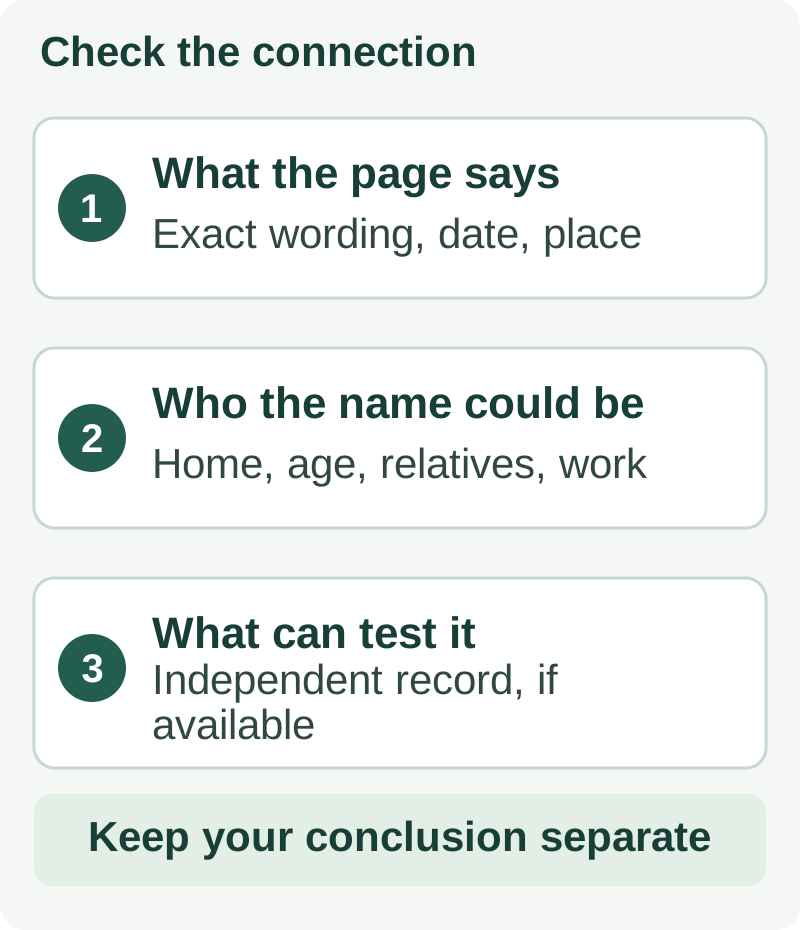
Write down what the newspaper says before deciding whether it refers to your relative. A report may name a person but omit their age, home address or relationship to anyone else. Compare the location and date with records you already have. Ask what would distinguish this person from another resident with the same or a similar name.
A useful check has three parts: the words and page in the newspaper, the details that support your identification, and the gaps that remain. Keep them separate in your notes. The diagram below is a reminder that an article can support one detail without proving every part of a family story.
A second newspaper story may help if it adds a new detail or comes from a separate report. If it repeats the same wording, names the same wire service or credits another paper, treat it as a reprint unless you can establish otherwise. More copies of one account do not create more independent witnesses.
Choose another record that can test the claim
Pick a record type that matches the statement you want to check. If the newspaper says a person died, look for records that can establish identity and death, such as a death certificate, burial register or cemetery record where available. If it places a family at a damaged address, a city directory, census, tax list, property record or map may help test the residence. An inquest, court file or local government record may be relevant when the article reports an investigation or official action.
The right record depends on the place, period and event. Some records may never have been created, may not survive or may be restricted. A directory can support an address in a given year without proving that someone was inside a building when it burned. A newspaper can report an injury without establishing the person's later condition. Be specific about the claim each source can support.
When possible, compare evidence created independently. A later newspaper that copied an earlier article is weaker as a separate identity check than a record created for another purpose. Keep the source's date, creator and wording with your interpretation. If the records do not agree, record the disagreement and leave the identification open.
Check weather-event dates with the right reference source
For a U.S. weather event, NOAA's Storm Events Database can help check reported event dates and locations within its period of record. NOAA's currently listed records begin in 1950, so the database cannot verify an earlier storm or flood. Coverage and event categories also vary over time. Read the database notes and use it as one reference for the event, not proof that a particular ancestor was present or affected.
For an older event, start with the newspaper and look for a local chronology or archival guide that names the event, place and dates. Compare sources before settling on a timeline, especially when later histories disagree with contemporary reports. A dated weather record can help anchor a storm search; it cannot establish which family members were in the area.
For fires, industrial accidents, shipwrecks or transport incidents, look for a source that matches that event type and period. A state archive, municipal collection, historical society, court record or company record may preserve useful material. Availability varies, so check the repository's own catalog and ask about the exact place and date range.
Record what you searched and what remains uncertain
Save enough detail for another researcher to find the same item. Record the newspaper title exactly as printed, its publication place, edition if shown, issue date, page or column, collection or repository, stable link or call number, and the date you accessed it. Note whether you searched full text, read page images or consulted print or microfilm.
Keep the search terms and dates that returned no result. Record missing issues separately from issues you opened but where no relevant mention appeared. Those are different outcomes. A collection may cover the title but lack the week you need, or a page image may survive without searchable text. The Library of Congress's guide to citations and image links describes ways to return to a particular newspaper page. Our guide to verifying and preserving a newspaper discovery has a fuller evidence checklist.
For each item, write two short notes: “The newspaper reports…” and “I think it may refer to…” Add a third note if you have not checked an independent record. This keeps a promising clue from turning into a definite family-tree claim before the evidence is ready.
Try a focused disaster search this week
Choose one ancestor whose connection to a town is supported by a record you can cite. Write a short question about a local fire, flood, storm or accident. If the event is only a family story, label it as unverified and use the exercise to find out whether a dated event can be identified.
Set a practical date window around the likely event. List a few event words and the place names that may have appeared in print. Identify one newspaper title that served the place and a second title only if you have a reason to think it covered the event. Check the reported issue dates before treating the collection as complete.
Search one name form and one event phrase, then open any promising page image. Read the full article and the material around it. Record the issue citation, exact wording and the detail that might connect it to your relative. Finish by naming one independent record that could test that detail. If none is available, state what remains uncertain rather than filling the gap with a guess.
A search without a name match can still confirm which title covered the place, show that an issue survives, or document a gap. Keep that information so you can choose the next search deliberately.
Common questions about disaster newspaper research
How do I find an old newspaper report about a fire or flood?
Start with the place and an approximate event date, then search the newspaper titles serving that area with period-appropriate event terms. Try the title's page images when text search misses a name, and inspect issues after the event for follow-up reports.
Does a newspaper prove my ancestor was a disaster victim?
A newspaper can report a name, location or event, but the item may not identify the person fully. Check the page and surrounding context, then compare the name with an independent record that fits the specific claim. Keep the identification provisional if details are missing.
What if I find no result?
A blank search may reflect an issue gap, poor OCR, an unindexed title, a different event term or no newspaper mention. Record the titles, dates and terms you checked. Do not treat a zero-result search as proof that the person was absent or unaffected.
Sources and further reading
- Library of Congress, Directory of U.S. Newspapers FAQ
- Library of Congress, How to find a U.S. newspaper
- Library of Congress, Chronicling America FAQ
- Library of Congress, Download and view Chronicling America files
- Library of Congress, Citations and links for Chronicling America
- NOAA National Centers for Environmental Information, Storm Events Database