
Life events
How to find historical marriage, birth and family announcements
Search the changing language of marriage, birth, engagement and family notices using place, relationships and publication timing.

On this page
- Decide which family event you are looking for
- Learn the vocabulary of marriage and engagement news
- Learn the vocabulary of birth and family announcements
- Match the search date to the event's publication pattern
- Use people and places when names are indexed poorly
- Browse the pages where local life was reported
- Use relationship language to connect households
- Compare announcement types without blending them together
- Check the names, dates and places against other records
- Find another route when the issue is missing
- Record the announcement and its limits
- A hands-on exercise for one family announcement
- Let the announcement open a trail, not close the question
- Sources for checking family announcements
A family announcement can be small enough to miss and important enough to change your understanding of a family. A birth may appear as one line in a local column. An engagement may be announced by a parent weeks before the ceremony. A marriage report may name the church, attendants and honeymoon destination. A family visit may connect two households that a formal record leaves separate.
Newspaper coverage is shaped by timing and local custom. One paper may print a detailed wedding account, while another gives only a notice of the license. A birth may be reported by the parents, a hospital, a church correspondent or a neighbor. The wording you expect today may not appear on the page at all.
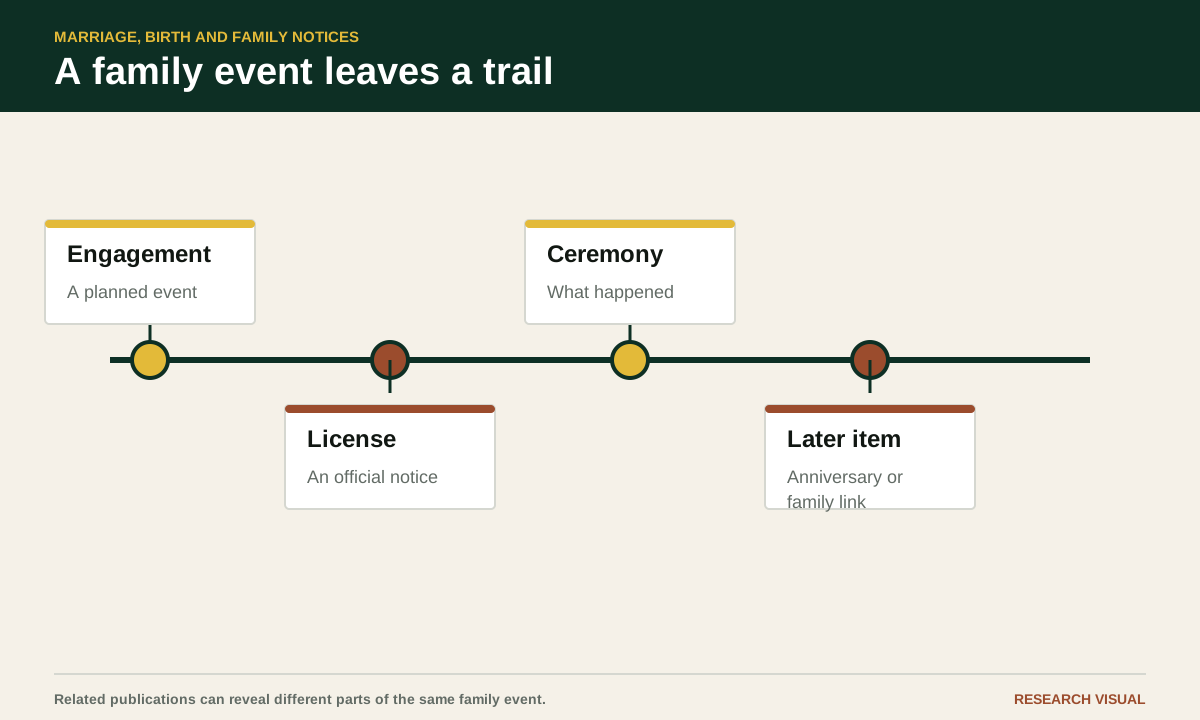
Treat a family announcement as a trail of related publications, not one perfect record. An engagement, license notice, ceremony report and later family item may each reveal a different part of the event. Searching that trail gives you more ways to find the people and test what the paper says.
This guide is about finding those announcements through event language, relationships, place and publication timing. It keeps marriage, birth, engagement and family news together because they often appear in the same local or society sections. Begin by turning the family clue into a focused research question, then use the newspaper sentence as evidence rather than automatic proof of identity. Read the item, compare it with other evidence and record what it says.
Decide which family event you are looking for
Start with one event and one evidence target. You may want to find an engagement announcement, confirm a wedding date, identify the parents named in a birth notice or connect a visitor to a household. Write that target before searching. "Find the family" is too broad to guide a newspaper search.
Separate related events that can appear weeks or months apart. An engagement announcement can precede a license and ceremony. A marriage license notice may appear before the wedding report. A birth notice may appear soon after the child arrived, while a christening or naming announcement appears later. A family anniversary can refer back to a marriage without repeating all the original details.
List what you know about the people involved. Include full names, initials, nicknames, maiden names, parents, spouses, children, employers, church, school and residence. An announcement may identify someone through a parent or spouse rather than through the form you have in your family records.
Add the place at several levels. Record the town, county, neighborhood, rural route, church, hospital, school and nearby community. A paper may call a place by a village name that is missing from a modern address. A regional title may carry announcements from several towns, while a small weekly may use a household name that local readers understood without a street address.
Then write down what the newspaper could add. You might be seeking an exact date, a maiden name, the names of attendants, a birth order, a residence or a relationship between two families. That target determines which pages and terms deserve your attention.
Learn the vocabulary of marriage and engagement news
Newspapers use many terms for a planned or completed marriage. Search marriage, married, wedding, bride, groom, ceremony, vows, nuptials, wed, weds, license, license issued, announcement, engagement, engaged, betrothed and to wed. Some terms describe the event, while others describe a column or a public notice.
Period language can be indirect. A paper may say that a young woman "will become the bride of" a named man. It may describe a couple as "quietly married" or report that they "returned from their wedding trip." A short local item may say that a couple has gone to another town to be married without giving the date.
Search the likely family relationship too. Try the bride's name with her parents' surname, the groom's name with his occupation or residence, and a parent with "daughter" or "son." Engagement items often appear under a parent's household, especially in society columns. Wedding reports may use a woman's maiden name once and her married name later in the same issue.
Look for associated terms such as attendants, bridesmaids, best man, reception, honeymoon, anniversary, shower and rehearsal. These terms can locate surrounding coverage when the principal names are poorly indexed. A wedding anniversary item may restate the marriage date and identify children or grandchildren, though it is a later source with its own limits.
Do not assume that "license" means the marriage took place. A license notice shows an application or issuance, depending on the wording and local practice. A report of a ceremony supplies different evidence. Keep the event described by the article separate from the event you are trying to prove.
Learn the vocabulary of birth and family announcements
Birth news can appear under birth, born, son, daughter, baby, infant, delivered, parents, arrived, maternity, hospital, home and blessed with. A newspaper may not use the phrase birth announcement. It may say that a son was born to Mr. and Mrs. James Carter, or that a daughter arrived at the Carter home.
Search the parents' names as carefully as the child's name. The child may be unnamed, identified only by sex, or given a first name in a later notice. A first name can also be misspelled or omitted from the text index. A query for a parent and born may find an item that a query for the child cannot. If the names are being damaged by scanning, borrow the OCR and page-image search techniques rather than adding endless random spellings.
The Library of Congress's genealogy guidance for searching Chronicling America notes that death notices and obituaries are not always in a separate section, that children's first names may be absent, and that married women may be identified by a husband's name. These are useful search possibilities, not rules for every paper. Apply the same caution here: try a parent, spouse or local column when the child's or woman's own name does not find the item.
Church and community language can provide another route. Baptism, christening, naming, blessing, congratulations and school enrollment may refer to a child after the birth. These later notices refer to a different event, but they can help you connect names, dates and households.
Family news covers more than births and weddings. Search visiting, guests, returned, entertained, reunion, anniversary, celebration, vacation, moved, residence, family gathering and household. A society column may record that a relative arrived from another state. A local item may mention a visit that explains how a family relationship became visible in a particular town.
Use the words as a set of clues rather than a required list. Local papers developed recurring phrases, and the same event could be described in several ways. When a search for "birth" fails, a parent name and "son" or "daughter" may be more productive.
Match the search date to the event's publication pattern
Publication timing is central to family announcements. Engagement news usually appears before a wedding, but the gap can be short or long. A marriage license may be printed before the ceremony. A detailed wedding report may appear after the event, sometimes in the next weekly issue. A birth notice may be delayed by the newspaper deadline or supplied after the family returned home.
Start with the date you know, then widen around it. For a wedding, search the weeks before and after the estimated ceremony. For an engagement, search earlier months and look for a later marriage report. For a birth, search several days or weeks around the date, especially in a weekly title. For an anniversary, search the date in later years while keeping the original event separate.
Consider the paper's publication schedule. A daily may carry a license notice on one day and a ceremony report later. A weekly may combine several events in one issue. A monthly community paper may publish a batch of family items long after the events occurred.
Search neighboring issues when a likely event date falls just after a publication day. A ceremony on Sunday may be reported in the next Friday issue. A birth on a Monday may miss a Tuesday paper and appear the following week. Record the publication date even when the article gives another event date. When the announcement becomes part of your family-history evidence, preserve the page, wording and limits before moving on to the next related item.
Use people and places when names are indexed poorly
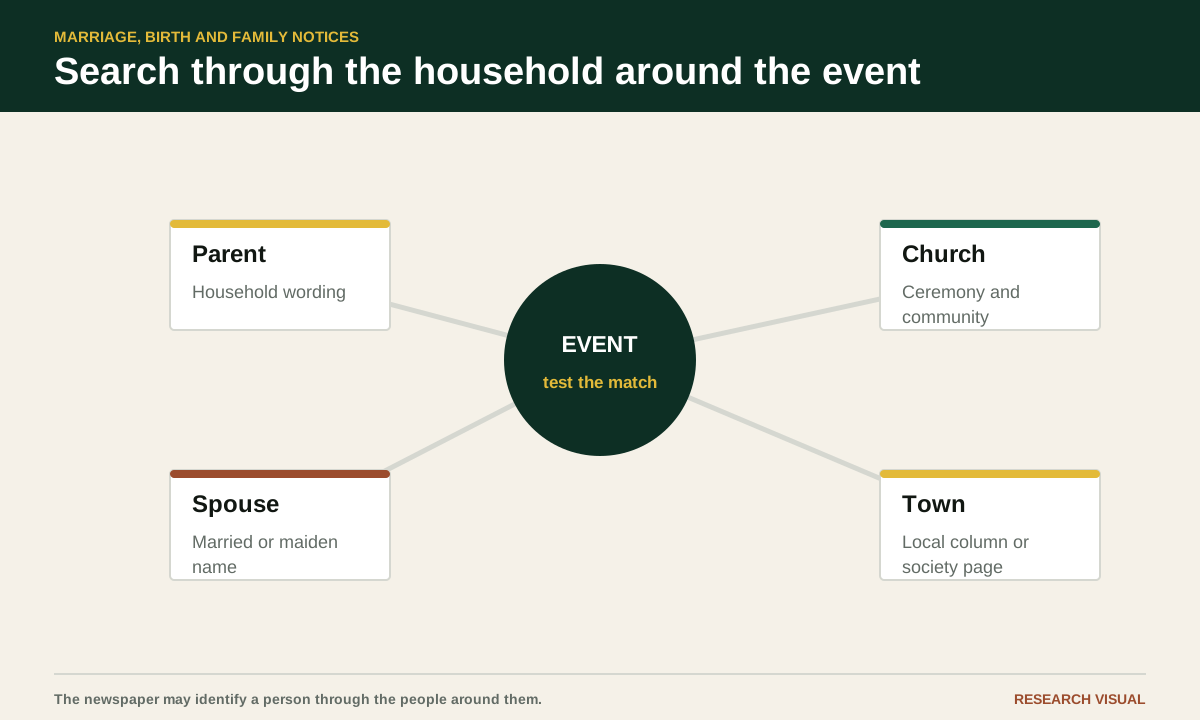
An announcement can be found through a person adjacent to the event. Search a parent, spouse, sibling, church, employer, school or town. A wedding report may name the couple clearly but index one surname incorrectly. The church or town may still lead you to the correct page.
Try household wording. Search "son of," "daughter of," "Mr. and Mrs.," "the home of," "their daughter," "their son," "parents of" and "family of" when the archive supports phrase searches. These expressions often occur in announcements and can reveal a family connection even when the individual's name is missing.
Nearby towns matter too. Families crossed county lines for churches, hospitals, work and marriage ceremonies. A rural paper may report the couple's home community, while a town paper reports the ceremony. Search the event in both locations before concluding that one newspaper lacks coverage.
Browse the pages where local life was reported
Open likely issues when the search box produces only weak results. Begin with society, local news, personal notes, church news and community pages. Wedding reports may appear on the front page or in a special section. Births can appear in local columns, hospital notes or brief announcements.
Learn the paper's layout. Page headings repeat, even when their location changes. A column called "Local News" may contain births, visitors and marriages in short paragraphs. A society page may feature engagements, receptions and weddings. A classified or public-notice section may carry marriage-license information separately from editorial coverage.
Use page thumbnails to find columns with dense text and recurring headings. Then read the full image rather than relying on a text snippet. A crop may omit a headline, parenthetical detail or continuation. It may also combine two unrelated items in the OCR display.
Read the surrounding items. A wedding paragraph may be followed by a note about the couple's parents or guests. A birth item may sit near a visit from a relative. These neighboring clues can help you interpret a name and identify the correct household.
Check the next issue and, when useful, the previous one. A weekly paper may announce the engagement in one issue, publish the wedding report in another and mention the couple's return in a third. Preserve each item separately. A later mention is not the same as the original announcement.
Use relationship language to connect households
Family announcements often tell you who people are through relationships. A bride may be introduced as the daughter of a named couple. A groom may be identified as the son of a neighboring farmer. A birth notice may name both parents but not grandparents. A family visit may say that a sister or cousin arrived from another town.
Search each relationship from both directions. If you know the bride's parents, search their surname with wedding or daughter. If you know the couple, search the parents' name with reception or marriage. If you know a child, search the parents with born, son or daughter. Each direction tests a different version of the newspaper's language.
Pay attention to titles and courtesy forms. "Miss Carter" may be the only form used before marriage. "Mrs. James Carter" can conceal a woman's first name. A widow or widower may be identified by a spouse's name even when the event concerns their child. Keep the printed form and your normalized name in separate notes. If you need to follow a woman through several naming forms and local columns, see our guide to finding women in old newspapers.
Relationship words can be ambiguous. "Family" may mean a household, a broader kin group or an organization. "Cousin" may be used casually. "Daughter" can refer to a daughter-in-law or another family relationship in some contexts. Quote the newspaper and compare it with records before turning a phrase into a precise relationship claim.
Compare announcement types without blending them together
An engagement notice describes an intention or plan. It may name the families, announce a season or give no ceremony date. A license notice records an administrative event as described by the paper. A wedding report describes a ceremony or celebration. A reception item describes what happened afterward. These are connected, but they do not carry identical evidence.
A birth notice records a report of a child's arrival. A baptism or christening records a religious event. A school item records a later stage of the child's life. A family anniversary article may repeat a birth date from memory. Use each item for what it directly describes.
Later coverage can correct or complicate earlier coverage. An engagement may be broken, postponed or followed by a different marriage. A license may not lead to a ceremony. A brief birth item may use a wrong first name and a later announcement may correct it. Search the timeline rather than choosing the first matching sentence.
Advertisements and paid announcements need separate treatment from staff-written reports. The family may have supplied the wording, and the newspaper may have edited it. A public notice may use legal language that is precise about one event but silent about relationships.
When you cite the discovery, identify the type. Write "marriage-license notice," "engagement announcement," "wedding report," "birth item" or "family visit column" rather than using the broad word announcement for everything. That label helps you and other researchers understand what the item can support.
Check the names, dates and places against other records
A newspaper item becomes more useful when you compare it with a civil record, church register, census, cemetery record, family letter or another newspaper. The comparison should test the item, not force every source to agree.
Check whether the couple lived where the article says, whether the parents' names fit, whether the church existed at that time and whether the date is possible. For a birth notice, compare the parents and residence with a later census or church record. For a marriage report, compare the ceremony date with a license or certificate when available.
Conflicts deserve notes. A newspaper may report a ceremony date that differs from the legal record because the reporter misunderstood the event or used the reception date. A parent may be identified by a nickname or a relationship through remarriage. A town name may refer to a postal address rather than the exact place of the ceremony.
Do not erase the conflict by choosing the detail that fits your family tree. Record the newspaper wording, the competing source and your current assessment. If you do not know why the dates differ, say so. The uncertainty may guide a search for a second issue or a clearer copy of the page.
A newspaper can establish that a community reported an event at a particular time. It may support an identity or relationship when details align. It rarely settles every question about a family by itself, especially when the announcement is short.
Find another route when the issue is missing
If the likely issue is absent, check other newspapers serving the same place. A town may have had a daily, a weekly, a church paper and a nearby county title. One may publish engagement and society news while another carries legal notices or marriage licenses.
Public libraries, state libraries, universities and historical societies can hold microfilm, clipping files or local indexes. Give a librarian the event type, names, town and date window. Ask about the exact issue and the sections likely to carry the item. A catalog record for the title does not guarantee that the needed page survives.
If you find a clearer copy elsewhere, record that collection and its issue details. Keep the route to the original newspaper visible so another researcher can check the same item.
Record the announcement and its limits
For each useful item, record the newspaper title, publication date, edition, printed page, section or column, archive identifier, stable URL and access date. Add the event type and the date the article gives, if different from the publication date.
Transcribe the names and relationships carefully. Preserve unusual spelling, initials and titles. Mark an unclear letter instead of guessing. If a line continues on another page, include the continuation or note where it appears.
Save a permitted page image with enough context to show the heading and surrounding column. Keep a full-page reference when you make a close crop. A clipping without its page context can make a short family item hard to identify later.
Write two sentences about interpretation. The first should state what the article says. The second should state what you infer and why. For example: "The July 9 paper reports that Miss Clara Lewis, daughter of George and Ruth Lewis, became engaged to Thomas Reed. This supports a connection between Clara and the Lewis household, while the wedding date remains unknown."
Record omissions too. If the item names parents but no mother, say that. If it calls someone a daughter without specifying whether she is biological or stepfamily, preserve that uncertainty. A precise limit is part of a good source note.

A hands-on exercise for one family announcement
Choose one marriage, birth or engagement question with a known town and approximate date. Write the evidence target in a sentence. Gather every name form and relationship you already have, including parents, spouse, church, hospital, workplace and nearby town.
Search the exact name first. Then search a parent or spouse with one event term, a relationship phrase such as daughter of or son of, and a place with a marriage or birth term. Keep a record of the date windows and titles used.
Open the most likely issues and browse local, society, church and community pages. Read any candidate item in full and inspect the next issue when publication timing could delay the report. Note whether you found an engagement, license notice, ceremony report, birth item, later family mention or another type of coverage.
Create a timeline with publication date, event date if stated, people named and source page. Add a second column for what each item does not establish. For example, an engagement notice may identify parents but leave the wedding date open.
Finish by comparing the item with one independent record you already have. Write a short assessment that separates the newspaper's wording from your conclusion. Choose one next source only if a specific gap remains, such as the exact ceremony date or the identity of a parent.
Let the announcement open a trail, not close the question
Marriage, birth and family items are useful because they contain connections. A parent leads to a household. A church leads to another column. A wedding report leads to an engagement, license or anniversary. A birth notice leads to later school, church or family news.
Those connections work best when you keep publication timing and event language in view. Search the terms a newspaper used, browse the pages where local life appeared and treat each notice as a particular kind of evidence. An engagement is not a marriage certificate. A family visit is not a complete relationship record. A birth item may be brief, late or corrected.
Once you record the page, date, wording and limits, a tiny announcement can support a much larger research trail. The name in the clipping matters, and the new, testable question it creates may matter even more.
Sources for checking family announcements
- Chronicling America: Using Historical Newspapers, Library of Congress
- Female Ancestors: Newspapers, Library of Congress
- Newspapers in the House History research guide, Library of Congress