
Fairs and agricultural shows
How to find ancestors in county fair newspaper reports
A fair announcement can give you a date; an award report may give you a name. Follow the event across issues, then test whether the printed exhibitor was your relative.

On this page
- Start with an adult, a place and a possible exhibit
- Find the fair's date before searching for results
- Choose newspapers by county, issue and readership
- Check specialist farm papers without mistaking them for fair records
- Search for classes and objects, not just surnames
- Read an entry, an award and an advertisement differently
- Separate the printed person from your relative
- Match outside records to the claim you need to test
- Record the fair trail so another reader can retrace it
- Try a one-fair search this week
- Common questions about county fair newspaper research
- Sources and further reading
A county fair can bring an otherwise hard-to-find adult into the newspaper under a different sort of heading: a livestock class, preserves exhibit, crop competition or demonstration. You might find a surname where a name search once drew a blank. But the first mention you discover may be an announcement for a fair that had not happened yet, and even a named prizewinner is not automatically your ancestor.
The useful question is narrower than “Did my family go to the fair?” Ask whether a particular adult appears as an exhibitor or award recipient at a particular event, and what the item actually says about that person. This guide follows fair and agricultural-show reporting rather than social visits, business advertising or school events. A ribbon is an appealing family story; the printed evidence has to carry its own weight.
Start with an adult, a place and a possible exhibit
Choose an adult relative you can place in or near a county during a bounded period. Write down the source for that location, the name forms they used and what, if anything, you know about their work or household production. A census entry that calls someone a farmer is a reason to investigate, not evidence they took an animal to a fair. An old recipe book does not mean its owner entered a preserves class.
Give yourself one testable question. For example: “Was the E. Moreno named in the poultry awards at the county show the adult Elena Moreno who lived near the fairgrounds that year?” Elena Moreno and this proposed award are fictional examples, not a transcription or claim about an actual fair. The question has three links to test: that the event took place, that an E. Moreno was named in the relevant report, and that the printed person can be identified as Elena.
Begin with the family's documented county or nearby market town. Fairgrounds, sponsoring societies and newspaper offices need not share an address, so record the event's actual location when you find it. Search an adjacent county only when a title, event notice or known journey gives you a reason. If your starting place or period is still a guess, turn the family hunch into a research question before searching every fair in a state.
Keep the claimed exhibit category provisional. A person associated with a farm might have entered flowers, needlework or baked goods rather than stock. A household item may have been entered under another family member's name. Looking across sections is worthwhile; attributing an anonymous exhibit to your relative is not.
Find the fair's date before searching for results
Look for the fair's formal name, county, host town, organizing body and scheduled dates. Newspapers may use “county fair,” “agricultural fair,” “farm show,” “stock show” or the name of a local agricultural society. Do not merge events merely because two notices mention the same county. A fall county fair and a winter fat-cattle sale can be different occasions with different entrants.
One concrete example shows why dates require care. The Digital Library of Georgia's digitized *Farmers and consumers market bulletin* for December 1, 1939 includes an announcement for the Southwest Georgia Fat Cattle Show and Sale in Albany on December 19 and 20. It names organizers, describes entry classes and asks prospective exhibitors to contact the county farm agent. Those are scheduled December dates, not evidence from this announcement that the show was held or that any particular entrant competed.
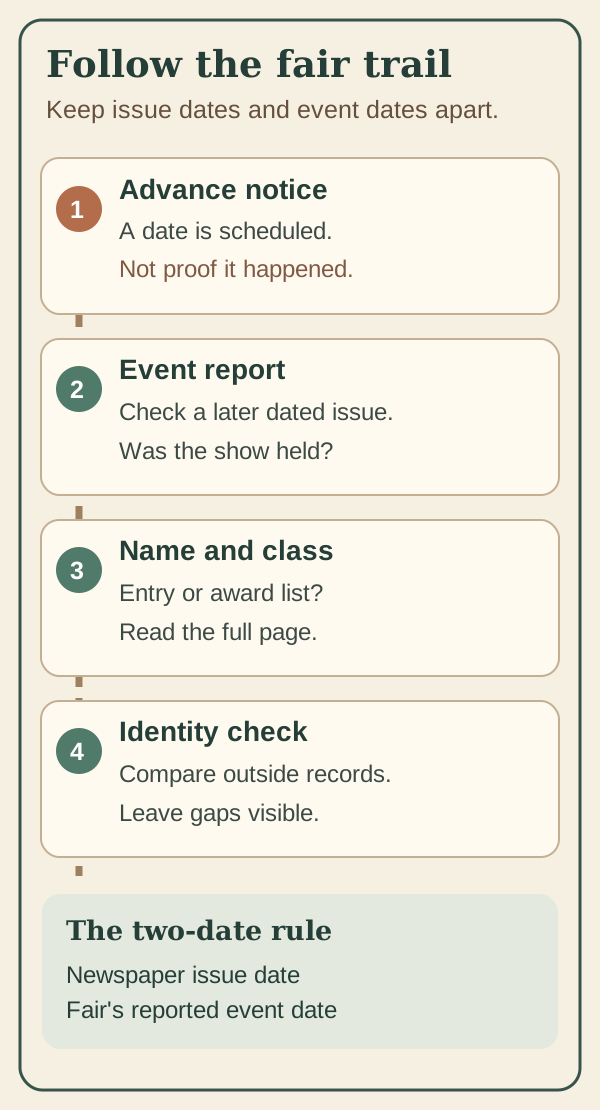
Write three dates on separate lines: the issue's publication date, the planned fair dates and the dates a later report says the event actually happened. A notice can be repeated or revised. Search later issues for postponements, reports, prize lists or cancellation notices before converting a scheduled date into a historical event date. If no retrospective account is available, say “announced for” rather than “held on.”
A daily paper might print reports during the fair, while a weekly may report after it closes. Begin with an issue before the announced opening, inspect issues during the event if they exist, and then follow the next few issues. This is a search window, not a claim that every fair generated a report. Note when an issue is missing, because a gap and a surviving issue with no results are different findings.
Choose newspapers by county, issue and readership
Identify titles that served the fair's host county in the relevant year. The town weekly may give a fuller list of local entrants than a distant daily, but that is a possibility to test, not a universal rule. An event drawing several counties might receive coverage in papers from the exhibitors' home towns. A neighboring paper could report its own entrants without reproducing the host paper's full list.
The Library of Congress Directory of U.S. Newspapers search tips describes title records and local holdings and explains filters for state, county, city and date. Use the directory to identify candidate U.S. titles and libraries, then verify the particular fair-week issues in the relevant collection or catalog. A title record or broad date span is not an issue-by-issue inventory. Keep a newspaper coverage map with publication town, title variants, issue dates examined and gaps.
Check the exact edition if a daily and weekly edition share a name. A fair supplement or special issue may have a different masthead, numbering or date from the ordinary weekly. Do not assume it survives because the parent title is cataloged. Ask a local library, state library or historical society about print and microfilm when the online run skips your dates. Our guide to finding the newspaper that covered a town helps when the local title is still unknown.
A catalog can tell you where to look. Only an opened issue tells you what that issue printed. Preserve that distinction if your search ends with a holdings record rather than a page image.
Check specialist farm papers without mistaking them for fair records
Agricultural papers and farm weeklies can add a regional route when general local papers yield little. The Library of Congress agricultural databases guide describes historical agricultural newspapers and the Farm, Field and Fireside collection of digitized farm weeklies and trade journals. Its database list distinguishes resources that require on-site Library access; check the collection's current access route and exact title dates before assuming you can read an issue at home.
A specialist publication may print a livestock-show announcement, judging note or selected prize story without carrying the complete county-fair results. The 1939 Georgia bulletin above is an instructive case: its show notice explains intended classes and contacts, but it is not a list of actual December exhibitors. “Any producer may enter” describes eligibility, not a roster of entrants. Search later issues of the same publication and the host-county newspaper before making a claim about participation.
Distinguish publication types. A state agriculture department bulletin, a trade journal, a county weekly and an official fair premium book are not interchangeable records. They can complement each other, but a premium book may set out prizes before judging, while a newspaper later reports winners. Look at the issue's masthead, publisher and date. A farm paper's story might be reprinted from a local paper, so two matching paragraphs do not necessarily provide independent confirmation.
Use free institutional routes first. If a library guide points to a subscription database, check whether a public library offers access or a repository holds the same title in another format. Do not pay for a broad archive until you have checked the title, issue and page you actually need. Free and library newspaper access gives a wider route through those options.
Search for classes and objects, not just surnames
The names may sit beneath headings rather than in a narrative article. Try the fair's name and town with “exhibits,” “premium list,” “awards,” “prizes,” “winners,” “entries,” “judging” or a known class such as poultry, cattle, fruit, garden produce, baking or handicrafts. These are candidate search words, not a promise that the newspaper used them. Read the headings around any match to learn whether you have a competition list, an invitation to enter or a notice about goods for sale.
A common surname may yield more once paired with an exhibit class, township or fair date. Search initials, married and birth surnames when supported by your other records; do not silently combine people with those names. If a newspaper abbreviates a name, copy the abbreviation as printed. Search a distinctive exhibit, such as a breed or product named in a family source, even if the surname is missing from OCR.
The Library of Congress Chronicling America FAQ says its searchable newspaper text is machine-generated OCR and warns that small type and image quality cause errors. Prize tables with narrow columns are especially worth checking against page images. This is a reason to browse likely issues, not to invent a corrected name from a damaged scan.
Read the whole list and its heading. A line that looks like “Mrs. E. Moreno, first” may belong to an adjacent class if the columns have slipped in the extracted text. The full page lets you see whether “first” means a prize, a class number, a first-day appearance or something else. If the name remains illegible, record the uncertainty rather than completing it from a family tree.
Read an entry, an award and an advertisement differently
A prospective entry list may say who registered before the show; it does not establish that an exhibit arrived or was judged. A retrospective award list reports a prize or placing, but may omit residence, given name or the person who actually raised the stock. An article describing attendance does not make everyone in a photograph or a crowd an exhibitor. Pay attention to the verb and the publication date before deciding what happened.
An advertisement for farm equipment beside a fair story is evidence that a seller advertised, not that the seller competed. A social column saying a family visited the fair may help with travel research, but it cannot answer who submitted a particular exhibit. A school club report belongs to a different age and institutional context from an adult farmer's entry. The 1939 Georgia announcement even mentions separate youth exhibits; do not merge those with an adult livestock class just because the show name matches.
If a fair organization published a schedule, premium book or catalog, compare its names and categories with the newspaper report, noting whether the document predates judging. A fair catalog entry and a later award may describe different stages. Where only a clipping survives, be content with what it says. Do not infer a missing catalog, an unprinted prize or an owner's name from the fact that a show occurred.

Separate the printed person from your relative
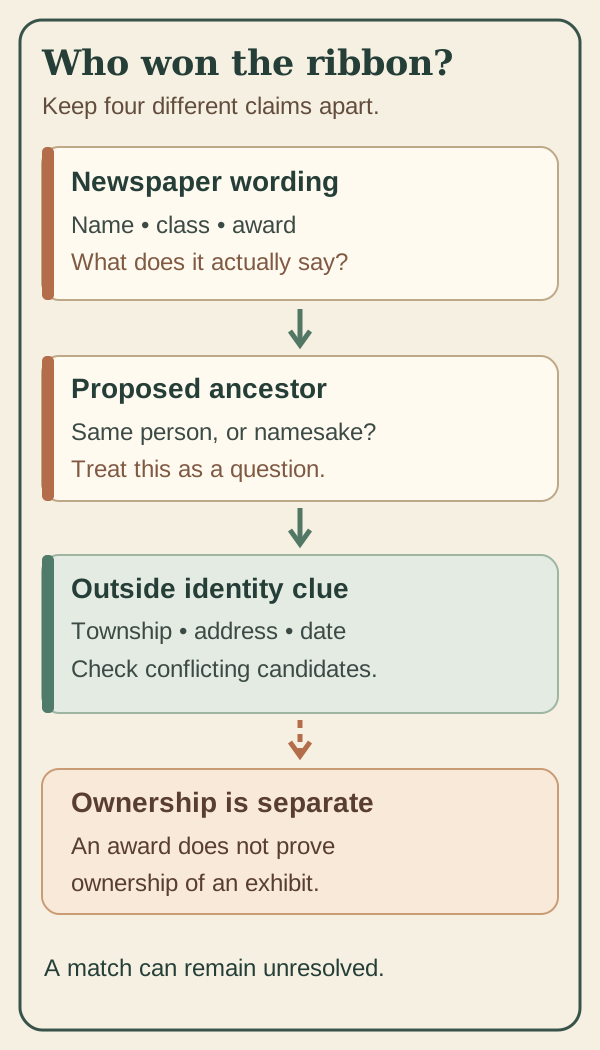
Make a two-column note before entering any find in a family tree. In the first column, transcribe the newspaper's name, class, placement and any address or township exactly as printed. In the second, list what you already know about your relative from independent records. A third column should hold contrary evidence and missing identifiers. This simple separation prevents “same name, same county” from becoming an identification by repetition.
A location can be quite broad. If an item says “E. Moreno, poultry,” the surname, initial and general fair location may match several adults. A report that gives a full name and township offers a stronger candidate, especially if a separate dated record places your relative there. But a census showing that the family farmed does not by itself show they entered poultry. Seek something that distinguishes the candidate from another adult: a specific home address, occupation, household member, farm location or a separately created show record.
Do not turn a prize into proof of land or animal ownership. Someone might exhibit an animal, prepare preserves, submit a crop sample or receive an award without owning the field, barn or livestock mentioned in a family story. The newspaper's wording may credit an individual, household, farm or club. If ownership is the claim you need to test, look for records created to document ownership, not just a show result.
The fictional Elena Moreno question could end honestly at “the paper reports an E. Moreno prize, but the identification remains open.” A later directory that places Elena nearby narrows the possibilities without proving the prize was hers. If a second Moreno appears in the same township, keep both candidates in the research notes. A correction printed after the fair also matters more than a tidy story built from the first list.
Match outside records to the claim you need to test
If you need to establish residence, compare a dated city or rural directory, census, tax list, land record or correspondence appropriate to that place and year. A residence record can put someone near the show but may not prove an entry. If you need to confirm an entrant, a fair society's retained entry book, premium register or correspondence could be more direct, if one survives. Ask the holding archive about the specific fair and year rather than assuming it kept every show program.
For an award, a contemporary results sheet or later report may help resolve a blurred newspaper line. Compare who produced the two documents: a printed press release and a paper copying it may be one account in two containers. If a family ribbon survives, photograph its front and back, record its provenance and read any dated label. An unlettered ribbon is not self-identifying. Do not use its color alone to assign a fair, class, person or prize.
If the question is property ownership, look for a source that explicitly addresses title or possession for the relevant date, while recognizing that such a record may not identify the person who showed an exhibit. One document may test the adult's residence, another the show's result and another the ownership claim. There is no need to force all three questions into a single clipping.
When records conflict, retain the competing readings. A similarly named exhibitor in a neighboring township, a delayed issue, or a list corrected after judging might change your conclusion. Write a short finding that names the strongest evidence and what it cannot establish. Verify and preserve a newspaper discovery explains how to save the full issue reference alongside your interpretation.
Record the fair trail so another reader can retrace it
For each newspaper item, note the full title and publication place, issue date, edition or supplement if shown, page and column, heading, repository and stable link or call number. Record the fair's stated date separately. Quote only the words that matter for your question and save the surrounding context or a full-page image where permitted. A clipped name without the class heading can become almost impossible to interpret later.
Keep a compact search log: title, actual issue dates inspected, name forms and fair terms tried, page images browsed, and the result. Mark “issue unavailable,” “issue read, no relevant list” and “OCR search blank, page not browsed” differently. None of those outcomes proves your relative never exhibited. Even a held fair may have produced only an announcement in surviving coverage, or a report without names.
A good research note might read: “The December 1 issue announces a December 19 and 20 show in Albany and gives intended classes. No post-show result has been checked yet.” That is a sounder statement than claiming the show took place and attaching an ancestor to it. Preserve the announcement as an announcement while you look for what followed.
Try a one-fair search this week
Choose one adult whose county and approximate year you can document. Write one possible fair or show name and a one-sentence question about a specific kind of mention. If the fair name comes only from family memory, label it unverified. Identify a local title that actually overlaps your date window and note how you established its holdings.
Find one notice before the announced event. Record the scheduled dates and what the notice does or does not say about entrants. Then inspect an issue during or after those dates, extending to the next weekly issue if necessary. Search the fair name and a likely class heading before searching the surname, and browse the page image if OCR gives a suspicious name or broken table. One named item is enough for this exercise; there is no need to transcribe every award.
Finish with four sentences: what your independent record says about the adult, what each dated newspaper item says, whether the fair can be shown to have happened, and which identifier or outside record would test a name match. If you find no result, report the issues and pages examined. You may end the week with a well-dated announcement and an open question, which is still progress.
Common questions about county fair newspaper research
Does a fair notice mean the show took place?
No. An advance notice establishes what was announced at its publication date. Seek a later report, dated results or a different contemporary record to establish that the event happened. Until then, use “scheduled” or “announced,” even if the notice confidently says the show “will be held.”
Is a prizewinner with my ancestor's surname necessarily my relative?
No. Copy the exact printed name and class, then compare identifying details with independent records. Initials and common surnames may describe another adult. A prize entry also does not automatically prove ownership of the exhibit.
Where should I look if the local newspaper has no award list?
Check whether the fair-week issues survive and whether you have read the page images. Then try a nearby title with a reason to cover the event, a specialist agricultural paper of the right date, or the fair organization's surviving records. Some fairs may have no published named results in the sources available to you; do not invent a list to fill the gap.
Can a family ribbon confirm a newspaper entry?
It can provide another clue if its wording, date, class and provenance can be established. A blank or undated ribbon cannot identify an event or winner by itself. Check whether the ribbon and clipping are genuinely independent evidence or simply two objects kept together without a documented connection.
Sources and further reading
- Digital Library of Georgia, *Farmers and consumers market bulletin*, December 1, 1939
- Library of Congress, Directory of U.S. Newspapers search tips
- Library of Congress, Chronicling America FAQ
- Library of Congress, Agricultural programs databases guide