
Everyday life in newspapers
How to find ancestors in historical newspaper social columns
A short local notice may mention a visit, a club meeting or a trip home. Follow the names and places it gives you, then check each clue against other records.

On this page
- What social and local columns can tell you
- Choose a question that fits a short newspaper item
- Learn the newspaper’s own column names
- Search people, places and affiliations together
- Follow the people around the person you are researching
- Treat a mention as a clue, not a verdict
- Make a small network of mentions
- Check coverage before treating silence as evidence
- Keep a record another researcher can follow
- A short exercise for this week
- Where these columns help, and where they stop
- Sources and further reading
Local newspaper columns can add the small details that help you follow an ancestor: a visit, a club meeting, a journey home or a gathering at someone’s house. These brief reports may place someone in a town and give you another name or record to check.
The column might be headed “Local and Personal,” “Town Notes,” “Society,” or something the paper chose for itself. Some papers folded these items into rural correspondent reports or church and school news. There was no standard section name. The useful clue is often the item’s subject and location on the page, not the heading you expect to find.
This guide looks at everyday community mentions rather than obituaries or formal family announcements. A short report can point you toward a visit, an organization, a place or a date worth checking. Use it as a lead, then compare it with independent evidence before deciding who the item describes.
What social and local columns can tell you
A social item may record a visit, a visitor’s arrival, a trip, a gathering, an illness, a club event, a performance or a change in residence. A correspondent in a smaller town might report what happened locally for a newspaper printed elsewhere. Church, school, lodge, agricultural, musical and charitable activities can appear in their own sections or be mixed into general local news.
The details vary by place, newspaper and period. An item could name a visitor but not the host’s full name. It might identify a household by its address, a relative by a relationship, or a woman by a spouse’s name. An affiliation may be more distinctive than the person’s name. A school concert, for instance, could lead you to a programme, church record or school report that names its participants.
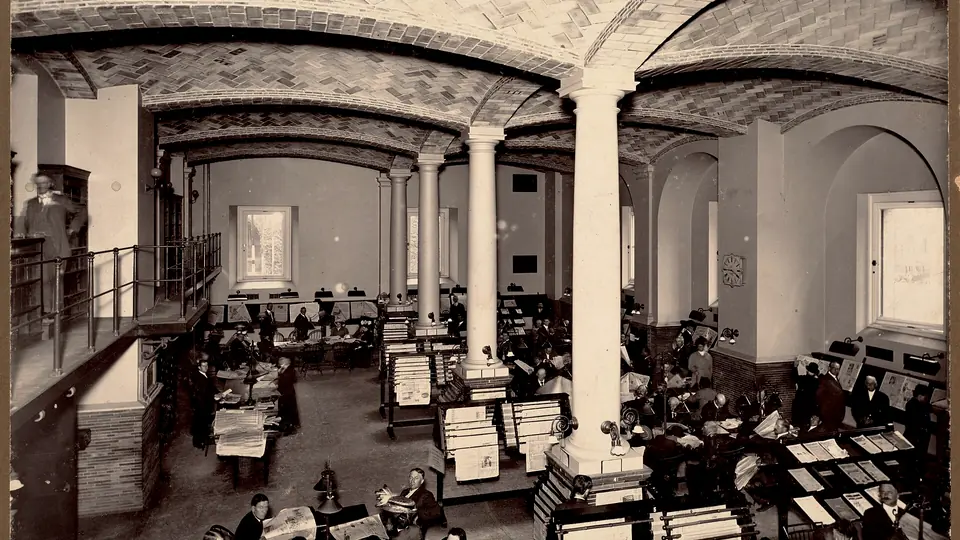
These reports often offer a view of ordinary activity rather than a complete biography. The Library of Congress’s guide to women in local history and newspapers points researchers to personal mentions, rural correspondents, affiliations, social calls, travel and illness. Its example of a woman whose life became clearer through recurring newspaper notices shows how small items can open new questions. Each item still needs to be checked against other evidence.
A Library of Congress case study follows Abigail Toothman through local-paper references to visits, family events and other changes in her life. It is one family's research story, not a promise that every ancestor will have the same trail. Its practical lesson is to follow a small mention into another question, then check the answer against records that identify the people, dates and relationships.
Choose a question that fits a short newspaper item
Before searching, decide what you hope the column can help you learn. “What was my great-grandmother like?” is a meaningful question, but an isolated notice is unlikely to answer it. A narrower question gives you something to test.
You could ask whether a known relative visited a particular town in a certain year, which church or club appears in a documented person’s records, or whether a family moved before a directory recorded the change. You might want to identify an unnamed host, place a person among known neighbours, or understand why someone travelled between two communities.
Write down the person’s known name, place, time range and one or two existing records that support those details. Add the exact point you want the newspaper to help establish. Keep separate notes for what you know and what you hope to discover. That distinction will help you avoid turning an intriguing snippet into a conclusion.
If you have not yet identified which paper served the area, first use our guide to finding the right newspaper for a family-history question. If you already have likely titles, record their place, dates and issue coverage in a newspaper coverage map.
Learn the newspaper’s own column names
Do not search only for the modern phrase “society column.” Editors used local headings and recurring labels that changed over time. A paper might group notices under “Personal,” “Among Our Neighbors,” “Items of Interest,” “County Correspondence,” “Church Notes,” or an entirely different title. Some correspondents filed under a town name rather than a descriptive heading.
Open a few issues near the period you are researching. Look at the page headings and note where local news appears. The section may move between pages or change name when the paper changes editors, ownership or layout. Browse a sample issue rather than assuming that a newspaper used the same arrangement throughout its run.
The Library of Congress’s newspaper guide for house history recommends searching addresses, streets, towns and counties as well as people. It also describes social-column items about visitors and events at a house. Apply that place-based approach to a family question: the town, street, church or meeting place may help you find a mention that an exact-name search misses.
A page image can reveal a column that OCR barely recognizes. Once you know where the local items tend to sit, you can browse that part of a likely issue more efficiently. For more on OCR, search variants and page browsing, see our guide to searching when OCR gets names wrong.
Search people, places and affiliations together
Build searches from the information you have, then vary one element at a time. Try a surname with the town, a street with a date range, a church or club with a family name, and a relative’s name with the place where a visit may have occurred. Search a group or institution as well as the individual. A person may appear in a report without being named, while an affiliation can point to a record that identifies members.
Try name forms that fit the period and the person: initials, nicknames, honorifics, shortened first names and spelling variants. For a woman, consider maiden and married names or a spouse-based form if other records make that plausible. Our guide to finding women in old newspapers covers those naming patterns in more detail.
Search the event language too. Depending on your question, try terms such as “visiting,” “returned,” “guests,” “entertained,” “at the home of,” “attended,” “meeting,” “reception,” “concert,” “picnic,” “sick,” or “removed.” These are starting points, not a fixed historical vocabulary. Read the paper’s own examples and adapt your terms to the wording it uses.
If a search tool supports quotation marks or date filters, test how those features work before relying on them. Different collections handle punctuation and OCR differently. Search one or two variants at a time, note the filters used, and keep the title and date range with each result. The OCR and page-image guide explains how to widen a search when an exact phrase misses.
Follow the people around the person you are researching
A short item may identify a person through someone else: a guest, host, sibling, club officer, neighbour or correspondent. Search those names in the same town and date range. A report about a relative’s visit may mention the household you are trying to find, even if your ancestor does not appear in the searchable text. For a visit described as a brother or sister, our guide to tracing siblings in old newspapers shows how to investigate the names and parentage without treating the notice as proof.
Suppose a fictional newspaper says “Miss L. Gray spent Sunday with Mrs. James Reed.” That wording does not establish L. Gray’s full name, her relationship to James Reed, or which Mrs. Reed the paper meant. It gives you several things to check: the town, the date, the household in the census or directory, and whether a known relative had that initial. Keep the item as a lead until the independent records fit.
Neighbouring items can matter. A local column may mention the same household more than once, use a nickname in one issue and an initial in another, or name a visitor’s home town later. Read the surrounding column and nearby issues when the first note is promising. Do not join mentions into one person’s timeline simply because the names look alike.
Treat a mention as a clue, not a verdict
Newspaper items were written for their own readers, often in compressed language. They may use courtesy forms, assume everyone knows the household, or omit details that a later researcher needs. OCR can also misread names or merge text from adjacent columns. Read the page image where available and preserve the exact wording before interpreting it.
A report that someone “visited her sister” states that the newspaper described a visit and used that relationship. It does not necessarily establish the visitor’s full identity or verify the relationship independently. A notice that a person attended a club event does not prove formal membership. A printed address may identify where an event took place, not where every person lived.
Newspapers can repeat errors, gossip or promotional language. Read a claim in its period and context, and look for another record that could confirm or challenge it. Depending on the question, that might be a census, city directory, church register, school record, club programme, land record, letter or a second newspaper report. The right check is the one that can test the particular identity, date or relationship you are considering.
Keep transcription and interpretation in separate fields. Write “The item says L. Gray visited Mrs. James Reed” in the transcription. Put “Possibly the documented Louisa Gray; relationship unconfirmed” in your interpretation. If the evidence changes later, you can update the interpretation without rewriting what the source actually said.
Make a small network of mentions
One notice can be useful. Several independent items may show patterns: a person repeatedly travelled between two towns, visited a particular household, took part in a named group, or appeared near a family event. A simple network diagram can help you keep the printed references distinct from the relationships you are testing.
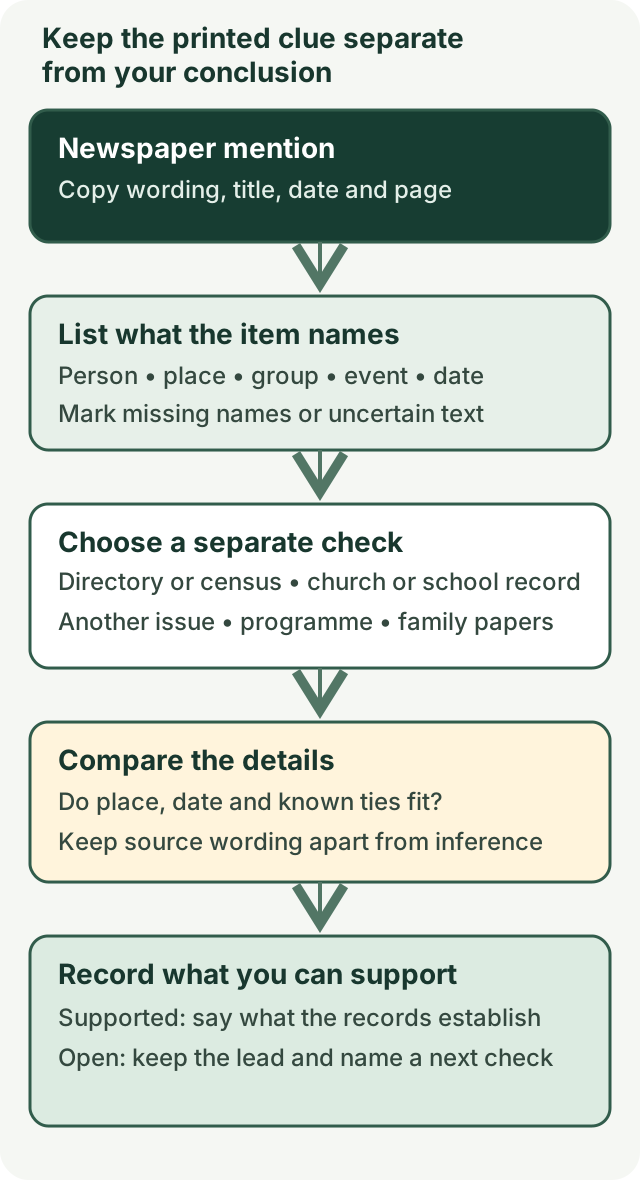
Start with one mention in the centre of your notes. List the people, place, group, event and date that the item actually names. Draw a separate line from each clue to a possible follow-up record. Use a question mark where a relationship is only suggested. This small map is more useful than immediately adding every named person to a family tree.
A recurring pattern can be meaningful without proving a family relationship. If several papers mention a person visiting the same household, that supports a repeated association in the newspaper record. It does not tell you whether the people were relatives, friends, employees, neighbours or members of the same organization. Use other records to work out which explanation fits.
Check coverage before treating silence as evidence
An empty search can mean several things. The person may not have been mentioned; the relevant issue may not survive; the paper may not be digitized; the page may be missing; OCR may have failed; or the item may use words you have not tried. Write down what you searched and which titles, dates and pages were available.
The Library of Congress describes Chronicling America as containing select digitized newspaper pages. Its coverage is not every U.S. paper or every issue. If your likely title or date is absent, use the Directory of U.S. Newspapers in American Libraries to identify repositories that may hold it. A directory entry is an access lead, not a guarantee that the exact issue survives or is open online.
For papers outside the United States, check national, regional and local library catalogues and newspaper directories for the country and period. The same research principle applies, but column labels, publication practices, repositories and access conditions vary. Do not assume an American heading or search strategy will transfer unchanged.
Keep a record another researcher can follow
For every useful mention, record the newspaper title, place of publication, issue date, edition if shown, page and column or section heading. Add a stable page link or image reference, the exact wording, the access date and any uncertainty in the transcription. Note the search terms and coverage you checked when a search produced nothing.
Keep a compact table or research note with separate columns for the source, transcription, people and places named, your interpretation, confidence and next check. If you save an image, include enough citation detail for another researcher to find the issue. Our guide to verifying and preserving a newspaper discovery covers the citation and preservation details.
Avoid copying a whole column if a precise excerpt answers your question. Follow the archive’s download and reuse terms, especially if you plan to publish an image or transcription. A citation to a page helps someone locate it, but it does not automatically grant permission to republish the image.
A short exercise for this week
Choose one ancestor and one town. Pick a five-year period for which you already have at least one independent record placing the person nearby. Write a question about a visit, group, event or move that a local column might help investigate.
Find one newspaper title that covered the town during some of that period. Confirm the available issues, then open several sample pages and note the actual names of the local or social sections. Search the person’s surname, a relative’s name and one relevant place or affiliation. If you find a likely mention, inspect the page image and read the full item with its neighbouring text.
Record what the newspaper says and what it does not say. Choose one other record that could test the identity or relationship. If no mention turns up, write down the title, dates, search terms and access limits you checked. That gives you a useful next step without treating an incomplete search as proof that the person was absent.
Where these columns help, and where they stop
Local and social items can add dates, places, associations and everyday activity to a family history. They may reveal a line of enquiry that formal records did not suggest, or help explain where to look for a school, church, group or household record. Their value often lies in giving you a more specific question to take to another source.
Their limits matter. Many items are brief, unnamed or shaped by the conventions of the paper. Not everyone had equal access to print or equal visibility in local reporting. A paper’s silence can reflect coverage, editorial choices, preservation or search quality as well as a person’s absence. A vivid story can be wrong, and a repeated name can describe someone else.
Use the column to find a lead, then test it. Keep the original wording, your inference and the remaining uncertainty visible. That leaves a research trail that another person can check and that you can revise when better evidence appears.